
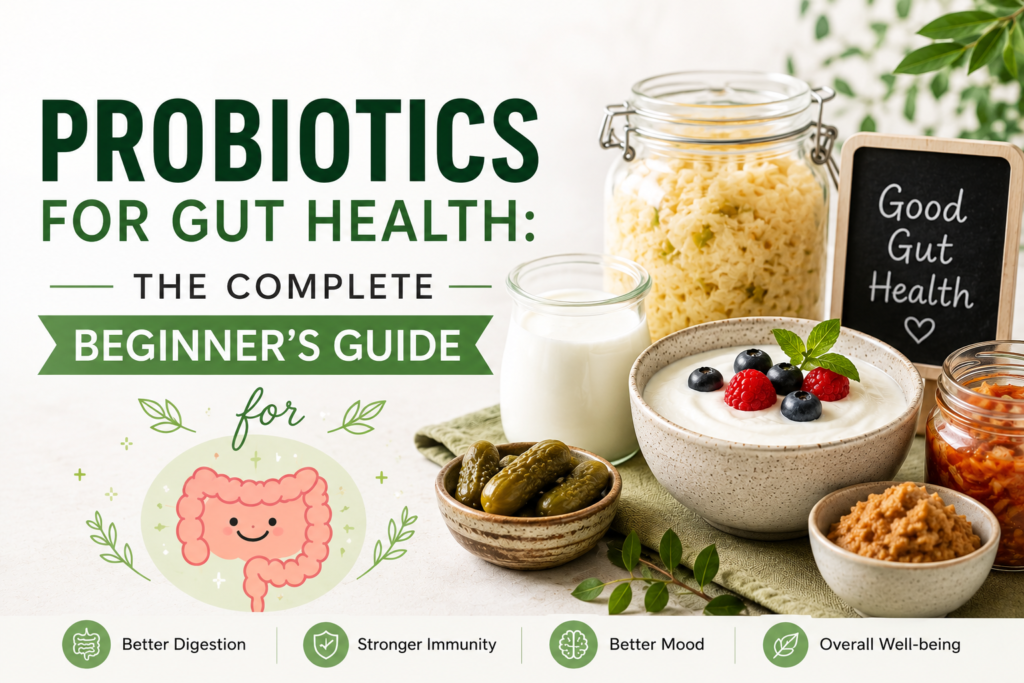
Probiotics are everywhere. You see them on labels supplement bottles and wellness blogs.. What do probiotics really do? Are they the key to a gut?
The truth is, probiotics and gut health are closely related. Your gut is home to trillions of bacteria that affect parts of your body. In this guide we will explain what probiotics are, how they work, the difference between probiotics and prebiotics the best natural sources and simple tips to help you eat healthy and support your gut every day.
What Are Probiotics?
Probiotics are microorganisms, mainly bacteria and some yeasts that are good for you when you consume them in adequate amounts. Think of them as the bacteria that help balance the ecosystem in your digestive tract, which is called the gut microbiome.
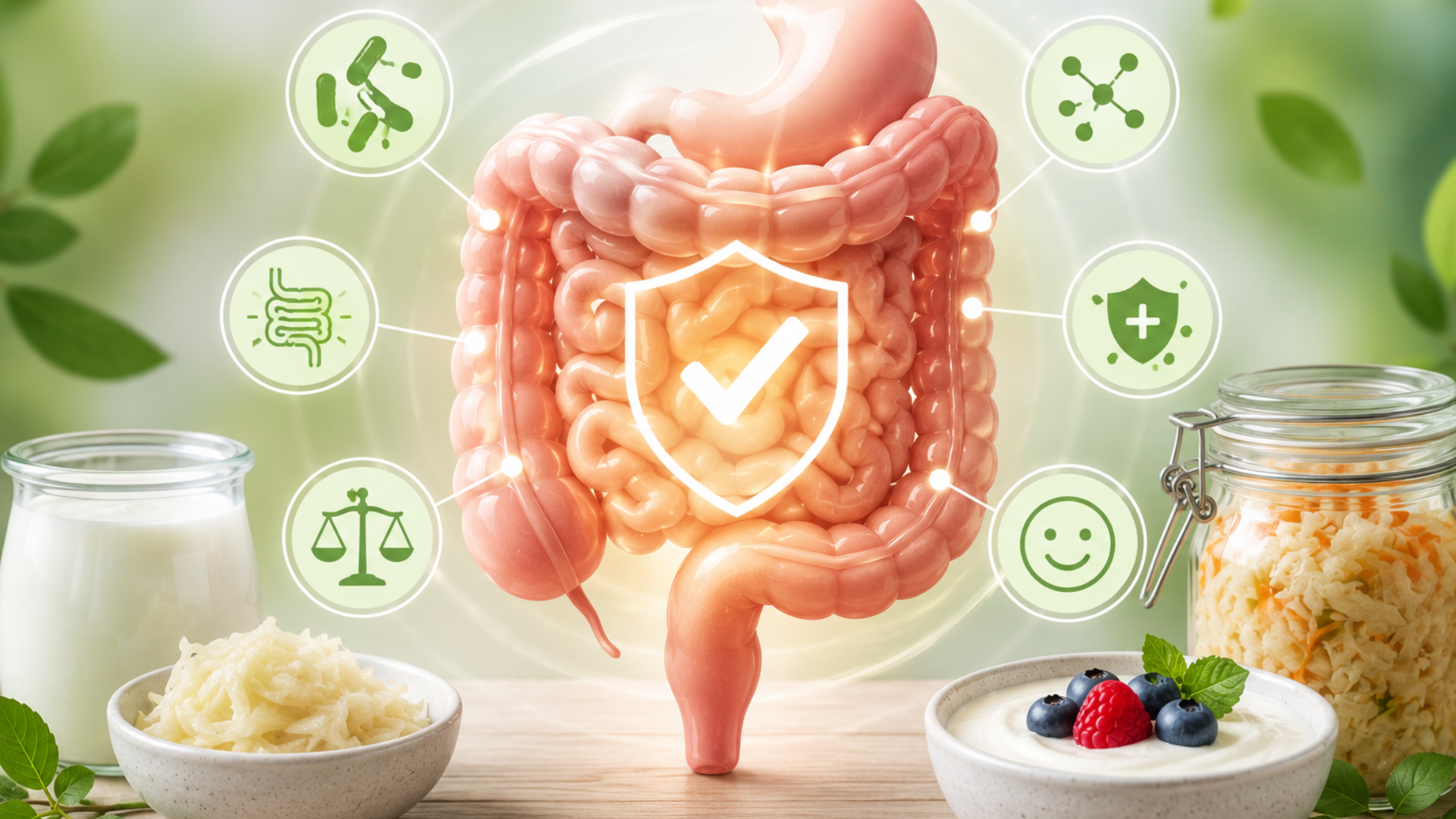
Your gut is home to trillions of microorganisms. This internal ecosystem plays a role in many things, including your immune system, your mood, your skin and how your body absorbs nutrients. When the balance between bad bacteria gets disrupted probiotics can help restore that balance.
The common probiotic strains you will see on labels include:
- Lactobacillus, which is often found in yogurt and fermented dairy and is helpful for digestion and lactose breakdown
- Bifidobacterium, which supports the large intestine and may help ease bloating and irritable bowel symptoms
- Saccharomyces boulardii, which is a yeast that is often used to support gut health during and after antibiotic use
How Do Probiotics Support Gut Health?
When people search for probiotics they are usually dealing with bloating, irregularity or general gut discomfort. Probiotics work in ways to help with this:
1. Restoring balance:
Your gut is meant to have a diverse mix of bacteria. Diets that are high in processed foods, sugar or alcohol or a course of antibiotics can wipe out strains and allow bad bacteria to take over. Probiotics help repopulate the gut with strains.
2. Strengthening the gut lining:
A gut lining acts as a barrier keeping toxins and undigested particles from leaking into the bloodstream. Certain probiotic strains help reinforce this barrier.
3. Supporting digestion:
Probiotics assist in breaking down food, fiber and lactose which can reduce bloating, gas and irregularity.
4. Boosting function:
Roughly 70% of your immune system is in your gut. A balanced microbiome helps your body respond more effectively to pathogens.
5. Influencing mood and mental clarity:
Research on the gut-brain axis suggests that gut bacteria communicate with the brain potentially influencing mood, stress levels and focus.
Prebiotics vs. Probiotics: What’s the Difference?
This is one of the common points of confusion so lets clear it up:
- Probiotics are live beneficial bacteria.
- Prebiotics are -digestible fiber that feeds bacteria.
Probiotics add bacteria to your gut while prebiotics nourish and grow the bacteria already there. For the results both should be part of your diet.
Best Natural Food Sources of Probiotics:
You don’t need a supplement to get started. Many traditional foods are naturally rich in probiotics including:
- Yogurt with active cultures
- Kefir, a fermented milk drink
- Sauerkraut, fermented cabbage
- Kimchi, a Korean fermented vegetable dish
- Miso fermented soybean paste
- Kombucha, fermented tea
- Idli and Dosa batter, naturally fermented and commonly eaten in Indian households
- Buttermilk, a traditional probiotic-rich drink in Indian diets
Do You Need a Probiotic Supplement?
Not everyone needs one. If you eat a diet with regular fermented foods you may already be supporting your gut well. However a supplement may be worth considering if you:
- Recently finished a course of probiotics like antibiotics
- Frequently experience bloating, gas or irregular digestion
- Have a diet in fiber or fermented foods
- Are recovering from a stomach illness or infection
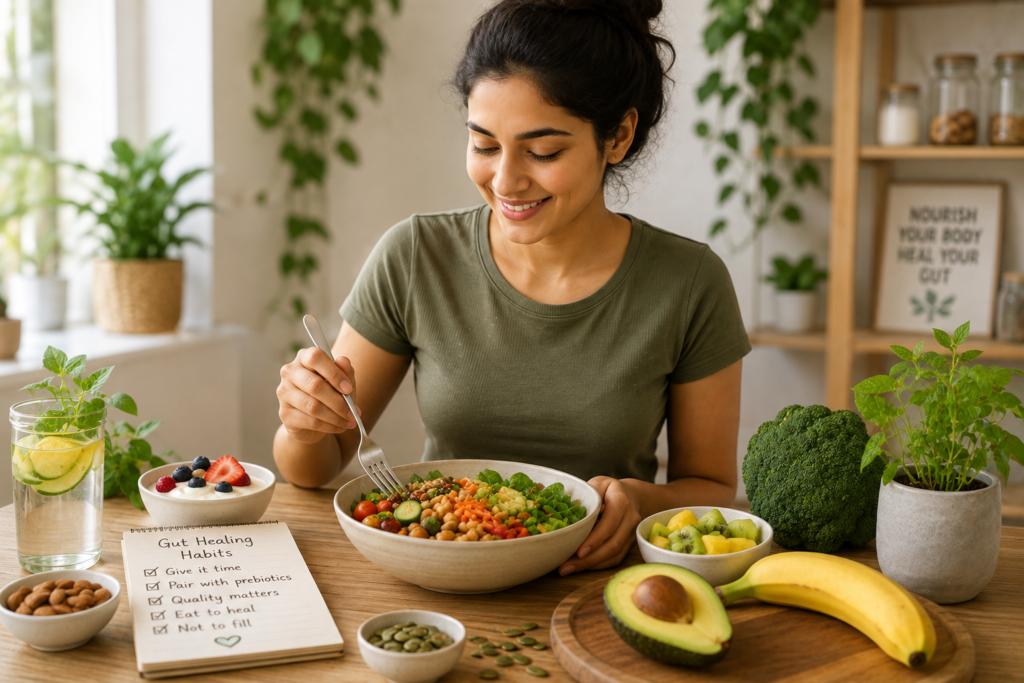
Simple Nutrition Tips to Eat Healthy and Heal Your Gut:
Give it time:
Gut bacteria don’t shift overnight. Most people notice changes over 2 to 4 weeks of probiotic intake.
Pair with prebiotics:
Eating fiber- foods alongside probiotics helps the good bacteria thrive.
Not all probiotics work the same for everyone:
Your gut is unique. What works well for one person may not work identically for another.
Quality matters:
Store fermented foods properly and check supplement labels for cultures and expiration dates.
Think “eat to heal ” not eat to fill”:
Small food choices add up over time.
Final Thoughts:
Gut health is not a trend it’s foundational to how your body functions, from digestion to immunity to mood. Probiotics are one of the tools you have to support that balance whether through everyday foods like yogurt and kefir or a well-chosen supplement.
Start small: add one fermented food to your routine pair it with fiber-rich prebiotic foods and give your gut time to adjust. These small consistent nutrition tips are what actually move the needle for long-term gut health because when you eat healthy your gut heals with you.
FAQ
Can I take probiotics and prebiotics together?
Yes, in fact, this is recommended. Taking them together tends to be more effective than either alone.
How long do probiotics take to work?
Most people notice improvements within 2-4 weeks of consistent use though this varies by individual and strain.
Can probiotics cause side effects?
Mild bloating or gas can occur in the few days as your gut adjusts. This typically settles down within a week.
Is yogurt enough to get benefits?
Yogurt with active cultures is a great starting point, but variety matters. Combining fermented foods introduces a wider range of bacterial strains.